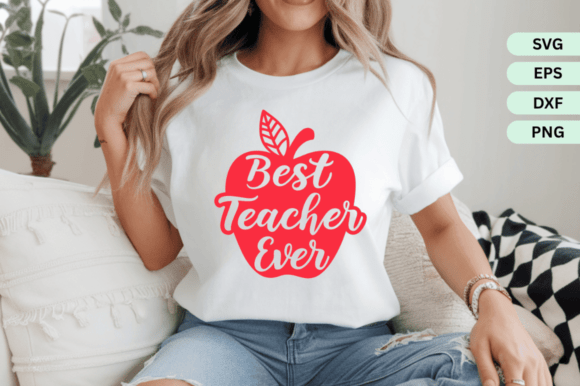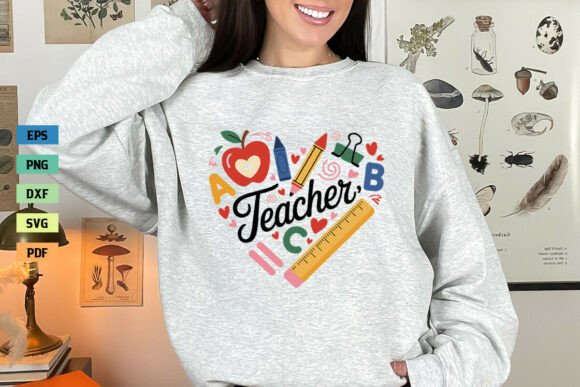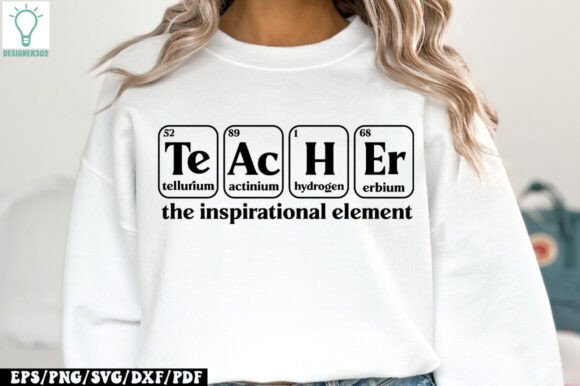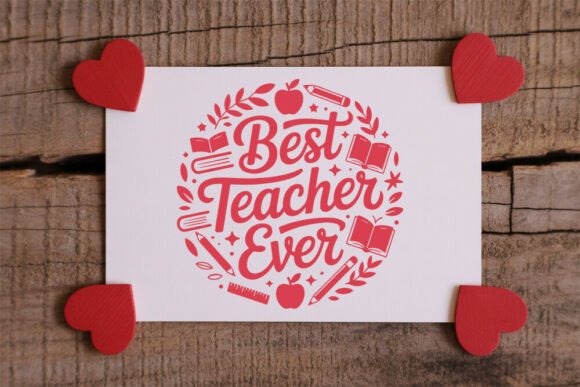
Reviewing the Best Teacher Ever SVG Valentine for Embroidery
As a designer who spends more time staring at stitch simulations than I do sleeping, I have learned to be skeptical of cute graphics. We all know that what looks crisp on a computer screen does not always translate well to thread and fabric. When I first opened the Best Teacher Ever SVG Valentine package, my immediate goal was not just to admire the aesthetics, but to determine if this design could hold up under the needle in a real-world production environment. For small business owners and Etsy sellers, a design is only as good as its stitch-out reliability.
First Impressions and Visual Personality
The mood of this design is warm, appreciative, and undeniably festive without being overly cluttered. It strikes a balance between playful and professional, which is crucial when creating items for educators. The layout feels balanced, with a clear focal point that draws the eye. From a graphical standpoint, the lines are clean, suggesting that the underlying vector paths in the included EPS and SVG files are well-constructed. This is vital because messy vectors often lead to erratic stitching paths.
The visual personality here leans towards heartfelt gratitude. It is not just a generic holiday graphic; it feels specific to the recipient. For a craft business, this specificity increases the perceived value. When a customer sees a design that feels tailored to their profession, they are more likely to perceive the finished product as a premium item rather than a mass-produced commodity. The theme fits perfectly into the category of holiday embroidery, specifically targeting the Valentine’s season but with a niche appeal to the education sector.
Real-World Application: The Tote Bag Test
To truly evaluate the Best Teacher Ever SVG Valentine, I imagined a common scenario for many handmade shop owners: preparing a custom embroidered tote bag for a teacher appreciation gift. Tote bags are popular because they are practical, but they present challenges due to the woven texture of canvas or cotton blends.
In this scenario, the design needs to be large enough to be legible but compact enough to fit within a standard hoop without requiring excessive re-hooping. The versatility mentioned in the product description suggests it can handle various scales. If I were stitching this on a heavy canvas tote, I would lean towards using a fill stitch for the larger elements to ensure coverage over the fabric weave. For the text, a satin stitch would provide the necessary definition and sheen that makes lettering pop against a matte background.
The result, theoretically, would be a sturdy, high-contrast piece that survives the daily wear and tear of a teacher’s classroom. This kind of durability is what builds customer trust. If the stitches pull out or look sparse after a few uses, the perceived quality of your craft business drops. Therefore, choosing a design with solid structural integrity, like this one appears to offer, is a smart move for commercial embroidery projects.
Fabric Considerations and Stitching Clarity
One of the most critical aspects of any digital embroidery file is how it interacts with different fabric textures. While this design is versatile, it is not immune to the laws of physics. On thin or stretchy fabrics, such as those used for baby embroidery or lightweight t-shirts, stitch density becomes a major concern. If the design is too dense, it can cause puckering, ruining the aesthetic of the personalized gift.
I recommend testing the design on scrap fabric before committing to a final product. If you are working with a knit fabric for a sweatshirt embroidery project, using a cut-away stabilizer is non-negotiable. The weight of the thread needs support. Conversely, on a woven tea towel or apron, a tear-away stabilizer might suffice, provided the stitch count is not excessively high. Since the exact stitch count is not provided in the basic description, checking the simulation in your embroidery software is a necessary step.
Dark fabrics present another challenge. If you are stitching this on a navy or black garment, you must ensure high contrast in your thread colors. A light-colored thread on a dark background can sometimes reveal the underlay or bobbin thread if the tension is not perfect. This is where the clarity of the design matters. Simple, bold shapes tend to perform better on dark fabrics than intricate, tiny details. The Best Teacher Ever SVG Valentine seems to favor boldness, which is a positive indicator for visibility on varied backgrounds.
Commercial Viability for Etsy Sellers
For the Etsy seller or creative entrepreneur, time is money. A design that requires constant tweaking, manual path editing, or frequent re-stitching is a liability. This design, available in multiple formats including DXF for cutting machines and SVG for digital use, offers flexibility beyond just embroidery. You can use the PNG for printable mockups or social media previews, which helps in marketing your handmade product before it is even stitched.
The ability to scale the design for different products—such as a small embroidered patch for a pencil case or a larger application on a pillow cover—adds to its commercial value. However, caution is advised when scaling down. Tiny lettering can become illegible if reduced too much, especially with satin stitches that have a minimum width requirement. Always check the smallest recommended size in your software to ensure the text remains readable.
Furthermore, brand consistency is key. If your small shop specializes in clean, modern aesthetics, this design fits well. If your brand is more rustic or vintage, you might need to adjust thread colors to match that vibe, perhaps using muted tones instead of bright Valentine reds and pinks. The design itself is neutral enough in style to adapt to various color palettes, making it a versatile asset for your library.
Practical Designer Notes and Licensing
Before you list this as a finished product or use it in client work, there are several practical steps to take. First, confirm the licensing terms. While the product description mentions it is ideal for crafting projects, always verify if commercial use is permitted for selling physical items. Most designers allow this, but it is best to be certain to protect your business.
- Test on Scrap Fabric: Never stitch directly on your final garment. Use a similar fabric scrap to check tension and density.
- Check Thread Contrast: Ensure your thread colors stand out against the fabric, especially for the text elements.
- Review Stabilizer Choice: Match the stabilizer to the fabric type—cut-away for knits, tear-away for wovens.
- Inspect Small Details: Zoom in on the design in your software to check for potential jump stitches or tight corners that might cause thread breaks.
- Mockup Testing: Use the included PNG to create digital mockups for your online store to gauge customer interest before producing inventory.
In conclusion, the Best Teacher Ever SVG Valentine is a strong contender for your spring catalog. It combines emotional appeal with practical design elements that, when handled with proper technique, can result in high-quality, professional-looking embroidery. For the experienced maker, it offers a reliable base to build upon, whether for a single personalized gift or a batch of small shop products. Just remember that the final quality depends as much on your machine setup and material choices as it does on the digital file itself.